Mattering Work: Celebrating the good at AKA April through June 2026

Updated: Jul 28
We are constantly reflecting on our work at AKA, what we co-create with our clients, and what we learn from our time in and with communities. Our goal is to always be in a place and state of being that matters. Just consider the idea of doing work, writing reports, publications, research, classes, and Zoom calls… that do not matter. This would be called a life not fully lived. And life is too short to do work that does not matter.
Our efforts to share and highlight work that matters via our AKA website and blog have been somewhat successful. We never actually know who reads the blogs, what they want to know, and how it makes them feel. Our goal is to elevate the success stories of communities we serve and highlight the people and places along the way.
This matters.
To make life and AKA work matter even more, we’ve decided to highlight a handful of events, evaluations, and insights that matter. The actual report, survey, evaluation, or product is not what matters—it is only the product of mattering work and mattering at work. Mattering is about feeling valued and adding value. Our work at AKA is all about this. What matters is seeing our clients and communities succeed in their work, building relationships that last, and investing in communities.
Here is a glimpse of work that mattered to us in the last few months.

Lake County Tribal Health Highlights the Importance of Data Collection
Excerpt by AKA Intern Thomasina Whipple
Why this matters…
One of the things we're most proud of is the way the Lake County community helps shape the future of Lake County Tribal Health programs. At our recent Gathering of Native Americans (GONA) event in July, participants contributed to a collaborative data collection mural, sharing their voices, experiences, and ideas. Every response collected represents more than just data—it reflects the priorities, strengths, and needs of our community. This is why data collection is so important. The information we gather helps us evaluate our progress, identify areas for growth, and ensure our programs continue to meet the needs of our Tribal community. It also allows us to share meaningful outcomes with our funding agencies and the Hinth'el Wellness Council, our Community Advisory Board, demonstrating the impact of our work and guiding future decisions. Data collection helps us build stronger, more responsive programs for generations to come.

Wilton Rancheria Event Elevates MMIP and Seeks Tribal Feedback for a Community Action Plan
Excerpt by AKA Intern Alina Sanchez
Why this matters…
The goal of our current project is to strengthen the relationship between our tribal community and law enforcement. To accomplish this, we are first connecting with tribal members through a community survey to better understand their experiences, concerns, and priorities regarding public safety and police services. The feedback gathered from the survey will be used to develop a Community Action Plan that reflects our community's voices. This plan will help guide future initiatives, strengthen public safety services, and support the prevention of Missing and Murdered Indigenous People (MMIP). On Saturday morning, we hosted an outreach booth at our tribe’s Backpack Giveaway event. At the booth, community members could learn about our project, access important resources, and complete our community survey. This event provided a valuable opportunity to connect directly with tribal members, share the purpose of our initiative, and gather meaningful feedback that will help shape our Community Action Plan. This outreach effort gave us a stronger understanding of our tribal members’ perspectives and priorities regarding our initiative. It also sparked conversations about additional ways to engage the community and expand participation. As we move forward, we will continue seeking opportunities to conduct outreach at community events, strengthen partnerships, and ensure that our work remains community-driven and responsive to the needs of our tribal members.
Fort Peck Tribal Health Engages Community Experts in Wellness Event to Address Opioid Overdoses
Excerpt by AKA Associate Brighten Crawford-Martin
Why this matters…
This summer, Fort Peck Tribal Health and AKA partnered together to host a Community Wellness Training in Poplar, Montana. To describe this event in one word, it would be restorative. Experts from the community provided hands-on training for participants to learn how they can restore balance in their lives physically, spiritually, emotionally, and mentally. Our local community experts consisted of Dr. Natalie Weeks-O’Neal- a physical therapist; Kai Baker and Savanah Smith- Indigenous chefs; Mike Turcotte and Dylan Youpee- Assiniboine and Dakota spiritual leaders; Loy Sprague- FPCC instructor; Dr. Adrian Buckles- Indigenous public health scholar; Jessica Spotted Bull and Ashley Solhem-Azure- Licensed Addiction Counselors. Participants learned the importance of connecting to each other and the Creator. They were taught how to become honorable stewards over their minds and bodies. They were also shown how they might use culture and land to feed their mind, bodies, and spirits. We are fortunate to have learned from incredibly knowledgeable and caring community members. We appreciate the participants who came, learned, and connected. We also want to give a big shout-out to the Nakota Dakota Oyate youth workers who jumped in without hesitation to help facilitate the event. Thank you all for providing a space where community members could walk away feeling restored.

Rocky Mountain Tribal Leader’s Council Student to Teacher (STEP) for all cultural activities in partnership with Plenty Coups and Hardin Schools
Why this matters...
This work brings culture front and center in the education realm. Language speakers, elders, and traditional games facilitators shared their knowledge with students, stressing the importance of living a good life and keeping their culture close to their hearts throughout their academic journeys. AKA partners with RMTLC and schools to evaluate the effectiveness of tutoring interventions– all show promising results.

Rocky Mountain Tribal Leaders Council TECPHI Strong Mothers Strong Nations Social Media campaign
Why this matters...
Native women are strong, powerful, healthy, resilient, and wise. They also experience some
of the highest rates of maternal mortality. This social media campaign, developed in partnership with Marcus Red Thunder, Tiffany Wolfe, Linda Donahue, and many others, highlights the beauty of motherhood and the wisdom they have to offer the world.

National Indian Child Welfare Act (NICWA) 44th Annual Protecting Our Children Conference
Why this matters…
We shared the Restoring the Sacred Circle Toolkit, listened to the grandmothers and elders, spent time in community with people we love and care about, had a book signing, met some interested readers, and learned what they need to heal.

Rocky Mountain Tribal Leaders Council Tribal Epidemiology Center 5-Year Evaluation Report
Why this matters…
We’ve been partnering with RMTLC Tribal Epidemiology Center for more than 20 years. This evaluation gave us the opportunity to trace their steps back, see improvements in capacity, and elevate some of the amazing work they do to provide training and technical assistance to Tribes in Montana, Wyoming, and Idaho. Les Left Hand, a Crow Elder and friend to AKA, guided us as we developed a teepee metaphor to guide our evaluation process. The original artwork from Navajo/Lakota artist Tiffany Wolfe and report layout by Macrina Singleton brought this report to life. It’s not just an evaluation report; it’s a piece of Tribal art. The animals, designs, colors, and ledger art paper engage readers and connect them to the Plains Indian culture. It matters.
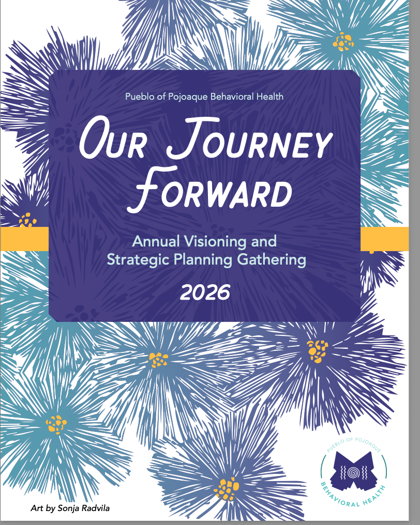
Pueblo of Pojoaque Behavioral Health Annual Gathering Report
Why this matters…
We gathered, reflected on goals and vision, created art and blind cameos, and spent time in healing waters. The report captures everything good about what is happening at Pueblo of Pojoaque Behavioral Health, and it’s a roadmap for the future.

Rocky Boy and Native PRIDE Good Road of Life Evaluation
Why this matters…
Evaluation tells us how the training impacts students, what they learn, what they plan to do with the information, how they are impacted, and what they need to live a good life. Over the last two decades, we’ve seen the impacts of the GRL and the positive results from consistent engagement with youth and community, grounded in culture, and connected to people who care.